In today’s competitive business landscape, every customer interaction counts not just for satisfaction, but for growth. Cross-selling and upselling have long been the twin engines of increased revenue, yet few businesses truly maximize their potential.
Now imagine combining those sales strategies with the flexibility and precision of a Virtual Assistant (VA). Suddenly, every email, chat, and follow-up message becomes an opportunity to delight customers and grow profits.
When properly trained and equipped with smart playbooks, your VA can become an invaluable extension of your sales team driving revenue effortlessly through personalized recommendations, timing, and empathetic communication.
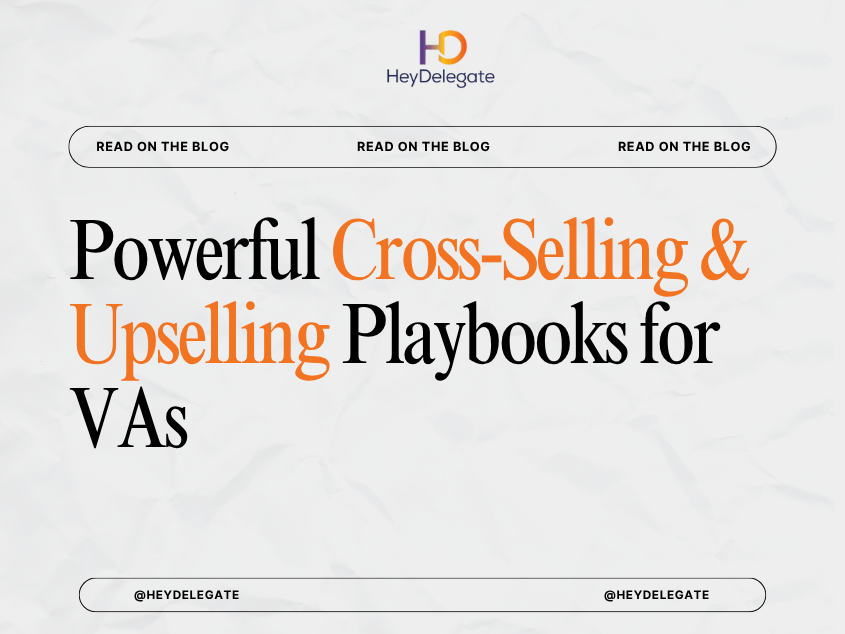
In this guide, we’ll break down Powerful Cross-Selling & Upselling Playbooks for VAs frameworks, techniques, and systems designed to transform your customer support and engagement workflows into powerful growth machines.
1. Why Cross-Selling & Upselling Matter More Than Ever
Acquiring new customers is expensive. Research shows that retaining and expanding existing customer relationships costs up to 5x less than finding new ones.
Cross-selling (recommending complementary products) and upselling (encouraging upgrades or higher-value options) help you:
- Increase average order value (AOV) without increasing acquisition costs.
- Improve customer lifetime value (CLV) through consistent engagement.
- Enhance brand trust by providing helpful, relevant solutions.
- Strengthen loyalty by anticipating customer needs.
When a Virtual Assistant applies these strategies strategically, they turn every support touchpoint into an organic sales opportunity, one that feels less like a pitch and more like personalized care.
2. The Difference Between Cross-Selling and Upselling
Let’s clarify the two concepts:
Cross-Selling
Encouraging customers to buy related or complementary products.
Example:
“Since you purchased this productivity software, you might find our automation plugin really helpful; it saves hours each week.”
Upselling
Encouraging customers to upgrade or buy a premium version.
Example:
“You’re currently on our basic plan. The Pro version includes real-time analytics and priority support, a great fit for growing teams like yours.”
When your VA learns the difference and the right timing these approaches create value-based selling that feels natural, not pushy.
3. Why VAs Are Perfect for Cross-Selling & Upselling
Virtual Assistants are uniquely positioned to execute these strategies because they already interact across multiple customer touchpoints:
- Managing support emails and live chats.
- Handling post-purchase follow-ups.
- Running CRM data entry and segmentation.
- Creating content or scheduling messages in marketing tools.
Every one of these moments is a chance to identify needs, offer value, and increase conversions.
A VA trained in cross-selling and upselling becomes a hybrid of customer service and sales creating a seamless, relationship-based experience that drives growth.
4. The Mindset Shift: From Selling to Serving
Before your VA can implement playbooks effectively, they must embrace a crucial mindset:
Cross-selling and upselling are not about pushing products, they’re about helping customers get more value.
The most effective VAs understand that every recommendation must:
- Be relevant to the customer’s needs or behavior.
- Add measurable value to their experience.
- Feel like a natural extension of the conversation.
In other words, educate first, sell second.
Customers don’t want to be sold to, they want to be understood.
5. Building the Foundation: Training Your VA for Smart Sales Conversations
Before your VA dives into any playbook, they need a strong foundation in four key areas:
1. Product & Service Mastery
Your VA must know:
- Product features and use cases.
- Common pain points customers face.
- Complementary products or upgrades that solve those issues.
2. Customer Segmentation Knowledge
Understanding audience groups is crucial. For instance:
- New customers need onboarding and product setup guidance.
- Long-term users may benefit from advanced upgrades.
- Frustrated customers should never receive a sales pitch; they need empathy first.
3. Communication Training
Empathy, timing, and tone are everything.
Train your VA to identify cues in language that signal curiosity, satisfaction, or unmet needs.
4. Data Literacy
Cross-selling and upselling thrive on data. Your VA should know how to:
- Use CRM tools (HubSpot, Zoho, Pipedrive).
- Read purchase history.
- Track user activity or engagement trends.
When these foundations are in place, your VA can personalize recommendations that feel thoughtful and strategic.
6. Cross-Selling Playbook: Turning Every Interaction into Value
Here’s a step-by-step cross-selling framework your VA can follow across channels.
Step 1: Identify Complementary Products
Use customer data to find logical pairings.
Examples:
- Someone buys an online course → Offer a workbook or coaching add-on.
- A customer orders a laptop → Suggest accessories like a cooling pad or sleeve.
- A client signs up for a VA service → Recommend bookkeeping or CRM management add-ons.
Tool Tip:
Your VA can use Shopify analytics, CRM purchase tags, or customer notes to identify these opportunities.
Step 2: Choose the Right Moment
Timing matters.
Cross-sell when the customer:
- Completes a purchase (thank-you page or confirmation email).
- Engages with a related support issue (“How do I do X?” → suggest tool Y).
- Requests additional assistance that relates to another product or service.
Step 3: Use the “Suggest, Don’t Sell” Formula
A simple conversational formula your VA can use:
“Many of our customers who enjoyed [Product A] also found [Product B] really useful for [specific result]. Would you like me to send more details?”
This keeps the tone helpful, not salesy.
Step 4: Use Bundles and Incentives
Encourage decisions by offering tangible value.
- Create bundled offers: “Buy X, get Y at 20% off.”
- Offer exclusive upgrades for loyal customers.
- Include limited-time discounts for quick responses.
Your VA can easily manage these promotions via your CRM or e-commerce dashboard.
Step 5: Track Results
Have your VA maintain a simple log:
| Customer | Cross-Sell Offer | Response | Outcome |
| John Doe | Suggested product B after A | Accepted | Sale +$45 |
| Sarah Lee | Offered add-on support | Declined | Not relevant |
This allows for data-driven improvements over time.
7. Upselling Playbook: Elevating Customers to the Next Level
Upselling is about offering more value, not more expense.
Here’s a structured playbook your VA can apply.
Step 1: Recognize Upgrade Readiness
Your VA should look for cues like:
- Customers hitting plan or product limits.
- Requests for advanced features or custom support.
- Consistent repeat purchases that signal high engagement.
Example:
“I noticed you’ve reached your upload limit twice this month. Our Premium plan includes unlimited uploads and priority support. Would that help streamline your workflow?”
Step 2: Use Data to Personalize Offers
Leverage CRM and sales tools to segment users by:
- Usage level.
- Purchase frequency.
- Service tier.
This ensures your upsells are relevant and timely.
Step 3: Apply the “Value Ladder” Formula
Train your VA to follow this 3-step message flow:
- Acknowledge current use
“You’ve been using our Starter plan for a few months now…” - Highlight value gap
“It seems like you’re exploring features that aren’t included yet.” - Offer solution with benefit
“Our Pro plan gives you real-time analytics and advanced support. It’s perfect for scaling teams like yours.”
Step 4: Add a Soft Incentive
People love upgrades when they feel exclusive.
Your VA can offer:
- Early access to features.
- Limited-time upgrade discounts.
- Personal setup assistance for new plans.
Step 5: Follow Up Without Pressure
If a customer declines, your VA can say:
“No problem at all, [Name]! I’ll make a note to revisit this in a few months in the meantime, here are some tips to get the most from your current plan.”
This approach keeps the relationship warm and trust-based.
8. Cross-Channel Opportunities for VAs
Your VA can use multiple platforms to implement cross-selling and upselling strategies seamlessly.
| Channel | Tactic Example |
| Email Support | Include subtle product mentions in resolution emails. |
| Live Chat | Suggest upgrades when customers mention limitations. |
| Follow-Up Emails | Send thank-you emails with “You might also like” recommendations. |
| CRM Outreach | Segment customers by interest and automate relevant offers. |
| Social Media DMs | Engage satisfied users with friendly upgrade tips. |
| Invoicing & Renewal Notices | Highlight value of renewing with an add-on or higher tier. |
Your VA’s strength lies in personalized, human conversation across these platforms something automation alone can’t replicate.
9. Tone Framework: How to Sound Helpful, Not Salesy
Empathy and sincerity should drive every upsell or cross-sell interaction.
Here’s a quick tone framework your VA can follow:
| Scenario | Wrong Tone | Right Tone |
| Cross-sell | “You should get this too.” | “Many customers find this add-on makes [product] even easier to use.” |
| Upsell | “Upgrade now for more features.” | “You might benefit from our Premium plan; it includes [specific solution] that aligns with what you’re already doing.” |
| Post-purchase | “Would you like to buy something else?” | “Since you enjoyed [product], I thought you might like [related item] here’s a quick overview.” |
Golden Rule:
Every message should feel like advice from a trusted partner, not a sales agent.
10. Measuring Success: Metrics That Matter
Once your VA begins implementing these playbooks, track their performance using measurable KPIs.
| Metric | Definition | Goal |
| Cross-Sell Rate | % of orders with an add-on purchase | 10–20% |
| Upsell Rate | % of customers upgrading | 5–15% |
| Average Order Value (AOV) | Average spend per transaction | Steady increase |
| Customer Retention | % of returning customers | Higher over time |
| Response to Offers | % of positive replies to suggestions | Track growth monthly |
Your VA can use CRM dashboards, Shopify analytics, or Google Sheets to maintain these metrics and report progress weekly or monthly.
11. Tools to Support Your VA’s Sales Efforts
Equip your VA with systems that make cross-selling and upselling smooth and measurable.
| Purpose | Recommended Tools |
| Email Marketing Automation | Klaviyo, ActiveCampaign, HubSpot |
| CRM Tracking | Pipedrive, Zoho, Salesforce |
| E-commerce Insights | Shopify Analytics, WooCommerce Reports |
| Customer Segmentation | HubSpot Smart Lists, Google Data Studio |
| Support Integration | Gorgias, HelpScout, Intercom |
Bonus:
Set up automated prompts in these tools that alert your VA when a customer fits a cross-sell or upsell profile.
12. Real-Life Example: Cross-Selling Done Right
Let’s say your VA supports a digital marketing agency.
A client purchases a one-time website audit.
Your VA replies:
“Thanks so much for ordering our site audit! Once we share your results, we can also provide a detailed SEO action plan, it helps many of our clients implement recommendations faster. Would you like me to reserve that add-on for you?”
Result: The client feels supported, not sold to and the business gains a 20% upsell on top of the original order.
13. Advanced Strategy: Creating Automated VA Playbooks
Once your VA has mastered manual outreach, you can build playbooks into automation systems that trigger when specific customer behaviors occur.
Example Triggers:
- Purchase completed → Suggest related add-ons.
- Reaching usage limit → Prompt upgrade email.
- Long inactivity → Offer reactivation discount.
Your VA can monitor automation reports weekly to refine tone and timing, ensuring everything feels organic and brand-aligned.
14. The Long-Term Impact of Strategic Selling by VAs
When your VAs master the art of cross-selling and upselling:
- Your revenue grows without extra ad spend.
- Customers feel genuinely cared for and understood.
- Your support system becomes a profit center, not just a cost.
- Your brand reputation strengthens through value-driven communication.
Over time, these small, strategic suggestions compound into massive business growth.
Conclusion
Cross-selling and upselling are not just sales tactics, they’re relationship-building strategies when executed with care.
By training your Virtual Assistant to follow structured playbooks rooted in empathy, timing, and data insight, you turn everyday support conversations into opportunities for deeper connection and greater revenue.
The best part? Customers don’t even realize they’re being sold to, they simply feel better served.
Empower your VA with these playbooks, and you’ll see your support channels evolve into smart, customer-centered growth engines one personalized conversation at a time. Because when your VA knows how to sell by serving, everyone wins. Get your VA today from HeyDelegate.